Low coolant is one of those problems that makes drivers second-guess what they are seeing. The reservoir is down, maybe the warning light came on, but there is no puddle under the car. The driveway is dry. The engine still starts. Nothing looks obvious from above.
That does not mean the coolant disappeared without a reason. Cooling systems can lose coolant in ways that are hard to spot, especially when the leak only happens under pressure or when the engine is hot. A low coolant level should always be taken seriously because coolant protects the engine from heat damage, corrosion, and pressure problems.
Coolant Can Leak Only When The System Is Hot
The cooling system is under pressure when the engine warms up. That pressure can open tiny leaks that are sealed or barely visible when the engine is cold. A hose connection, radiator seam, water pump seal, thermostat housing, or plastic fitting may only leak after the temperature and pressure rise.
By the time the vehicle is parked and cools down, the evidence may be hard to find. Coolant can dry on hot parts, drip onto splash shields, or leave only a faint stain. Some leaks are so small that they take days or weeks to lower the reservoir.
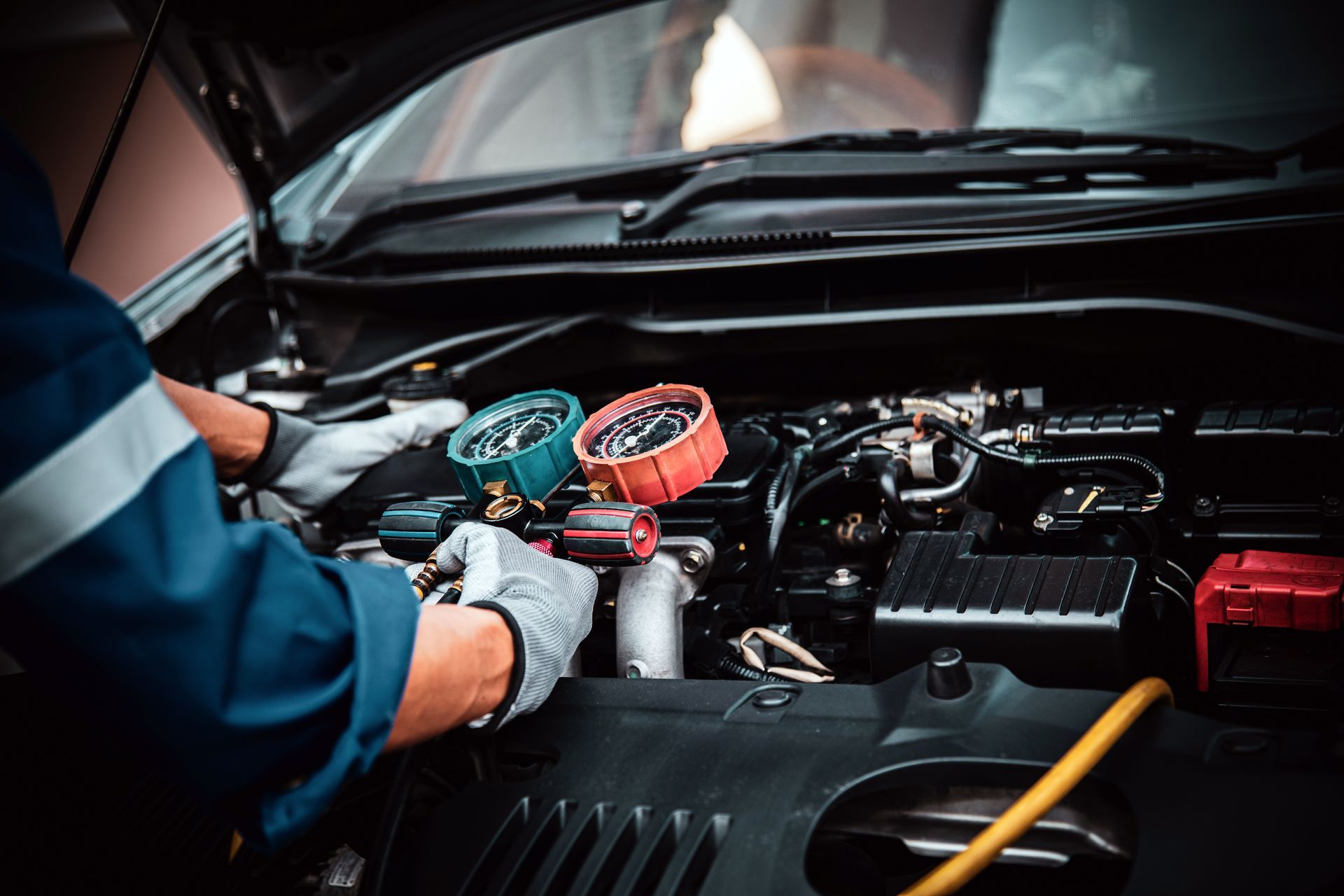
That is why a dry driveway does not clear the cooling system. A pressure test can often reveal leaks that never show themselves during a quick look under the car.
Coolant Can Evaporate Before It Hits The Ground
Coolant that lands on a hot engine surface may burn off before it ever reaches the pavement. Drivers may notice a sweet smell after parking, light steam near the engine, or crusty residue around a hose or fitting. The leak is real, but the ground stays clean.
Small coolant leaks are common around plastic cooling system parts as they age. Many modern vehicles use plastic radiator tanks, connectors, reservoirs, thermostat housings, and quick-connect fittings. Heat cycles can make those parts brittle, and a hairline crack may leak only when the system is hot.
Look for dried residue, not just liquid. Depending on the coolant type, it may appear white, green, orange, pink, or chalky around the leak point.
The Radiator Cap Or Pressure Cap Can Be Part Of The Problem
A weak radiator cap or pressure cap can let coolant escape into the overflow reservoir too early, fail to hold pressure, or allow air back into the system as the engine cools. The cap may look fine, but the spring and seal can weaken with age.
When the system cannot hold the correct pressure, coolant can boil sooner. Boiling coolant can create steam pockets, push coolant out, or make the level act strangely. The driver may see a low reservoir one day and a higher level another day, which makes the problem feel inconsistent.
The cap is small, but its job is important. It should be tested as part of the full cooling system inspection rather than overlooked because it is inexpensive.
Water Pump Leaks Can Be Sneaky
A water pump can leak from a seal or weep hole. Sometimes the leak is obvious, with coolant dripping near the front or side of the engine. Other times, the leak only appears while the pump is spinning and the engine is hot.
Coolant can trail along the engine, land on belts or pulleys, or dry before it reaches the ground. A failing water pump may also make noise, create a coolant smell, or cause temperature changes if circulation is affected.
A leaking pump should not be ignored. If coolant reaches a belt or the pump bearing deteriorates, the repair may become more urgent.
Internal Coolant Loss Needs Careful Testing
Not every coolant loss is external. In some cases, coolant can enter the engine internally through a head gasket problem, intake gasket issue on certain engines, EGR cooler issue on some vehicles, or another internal passage failure.
Internal coolant loss may show up as white exhaust smoke, rough startup, overheating, bubbling in the reservoir, milky oil, or unexplained coolant loss with no visible leak. Some internal leaks are obvious. Others are subtle and need testing before anyone can confirm the cause.
Internal coolant loss is more serious because coolant may be entering places it should never go. Continued driving can lead to overheating, engine damage, or contaminated oil depending on where the coolant is going.
Signs The Cooling System Needs Attention
Coolant loss often leaves clues, even when there is no puddle.
- A sweet smell after driving can mean coolant is leaking onto hot engine parts and evaporating before it reaches the ground.
- A reservoir that keeps dropping after being topped off means the system is losing coolant somewhere, even if the leak is small.
- Crusty residue around hoses, radiator seams, the water pump, thermostat housing, or reservoir can mark a leak that appears only under pressure.
- The heater blowing cold air while the engine is warm can point toward low coolant or air trapped in the cooling system.
- A temperature gauge that climbs in traffic or during hot weather can mean coolant level, airflow, pressure, or circulation is no longer right.
- Bubbles in the reservoir can indicate trapped air, boiling coolant, or a more serious pressure issue that needs testing.
These signs should be checked before the vehicle overheats. Low coolant is not just a fluid level issue. It is a warning that the cooling system may not be sealed and working correctly.
Why Topping Off Is Not Enough
Adding coolant may be necessary if the level is low, but it does not fix the reason the level dropped. Repeated top-offs can also create problems if the wrong coolant type is added or if the mix becomes incorrect.
The better plan is to find where the coolant is going. A proper check may include pressure testing, cap testing, leak dye testing, inspection of hoses and fittings, cooling fan checks, thermostat behavior checks, water pump inspection, and testing for internal leaks when needed.
Regular maintenance helps catch weak hoses, old coolant, failing caps, cracked plastic parts, and small seepage before the engine overheats. Once overheating happens, the repair can become much more expensive than the original leak.
Get Cooling System Diagnostics In Auburn, WA, With A Street Automotive
If your coolant level keeps dropping but you do not see a leak, A Street Automotive in Auburn, WA, can inspect the cooling system and test for hidden coolant loss.
For cooling system diagnostics before a small leak becomes an overheating issue, contact us to schedule an appointment.
Common Questions From Our Customers About Coolant Loss
Can Coolant Be Low Without A Visible Leak?
Yes. Coolant can leak only when the system is hot, evaporate on engine parts, collect on splash shields, or leak internally where it will not leave a puddle.
Is It Safe To Keep Adding Coolant And Driving?
It may help temporarily, but repeated coolant loss means there is an issue that needs testing. Driving with low coolant can lead to overheating and engine damage.
Why Does My Coolant Smell Sweet After Driving?
A sweet smell often means coolant is escaping and landing on hot parts. Even without a puddle, that smell should be checked, as the leak could get worse.