A healthy thermostat keeps your engine in its comfort zone. When it starts to stick or drift out of spec, small clues show up long before an overheating episode. Catching those early hints protects the head gasket, keeps fuel economy steady, and saves you from a stressful roadside stop.
Here is how we coach drivers to recognize thermostat trouble before it turns into a tow.
What the Thermostat Actually Does
The thermostat is a temperature-controlled valve in the cooling system. When the engine is cold, it stays closed so the coolant circulates only inside the engine and warms quickly. As the temperature rises to the set point, the valve opens and routes hot coolant through the radiator to shed heat.
If the thermostat sticks open, the engine runs too cool. If it sticks closed, heat builds fast. Either way, your gauge, heater, and fuel usage start telling the story.
Gauge Behavior That Raises an Eyebrow
Watch the temperature gauge on a typical morning. With a good thermostat, the needle rises smoothly to the normal zone and stays parked. A thermostat that is stuck open usually gives a slow warm-up and a gauge that never quite reaches the middle, especially on the highway. One that sticks closed climbs past normal quickly and may trigger a hot warning under load.
Another red flag is a gauge that wanders up and down on gentle hills. That oscillation can mean the valve is opening late or only partway.
Heater Performance Clues
Your cabin heater is a helpful thermometer. If the air takes forever to get warm and never feels truly hot unless you are cruising, that often points to a thermostat stuck open. If heat turns hot, then suddenly goes lukewarm while idling at a light, the engine may be running too cool for steady HVAC performance.
On the other side, a thermostat that will not open can give you intense heat right before the gauge surges into the danger zone. Pair the heater behavior with the gauge, and you will have an early read on what the thermostat is doing.
Cooling Fan and Radiator Hose Checks
When the thermostat misbehaves, fans and hoses give themselves away. With the engine fully warm at idle, the upper radiator hose should feel uniformly hot and pressurized. If it stays cool while the gauge creeps up, coolant is likely not flowing through the radiator. That is a classic "stuck closed" sign. If both radiator hoses are warm but the gauge will not hold steady, the valve may be floating.
Electric fans that cycle constantly on cool days are another hint that the system is chasing temperature because the thermostat is not controlling it well.
Other Symptoms That Point Toward the Thermostat
Engines that run too cool stay in a richer warm-up mode longer. You may notice lower fuel economy, a faint fuel smell on cold mornings, or a check engine light for poor thermostat control or long warm-up. Engines that run too hot can ping on hills, feel flat in traffic, and leave a hot coolant smell after a short drive.
If the coolant reservoir looks low with no obvious leak, a thermostat that spikes temperature can push coolant out and then pull air in as the system cools down. Air pockets will make heat output fade at idle and return at speed.
Quick Checks You Can Do Before You Visit
A few simple, safe observations help us diagnose faster.
In the morning, start the car and feel the upper radiator hose after two to three minutes. It should still be cool. If it is already hot, the thermostat may be stuck open.
- After a normal drive, park, let the engine idle, and watch the gauge. A slow climb past normal, with the fans not catching up, suggests the thermostat is not opening fully.
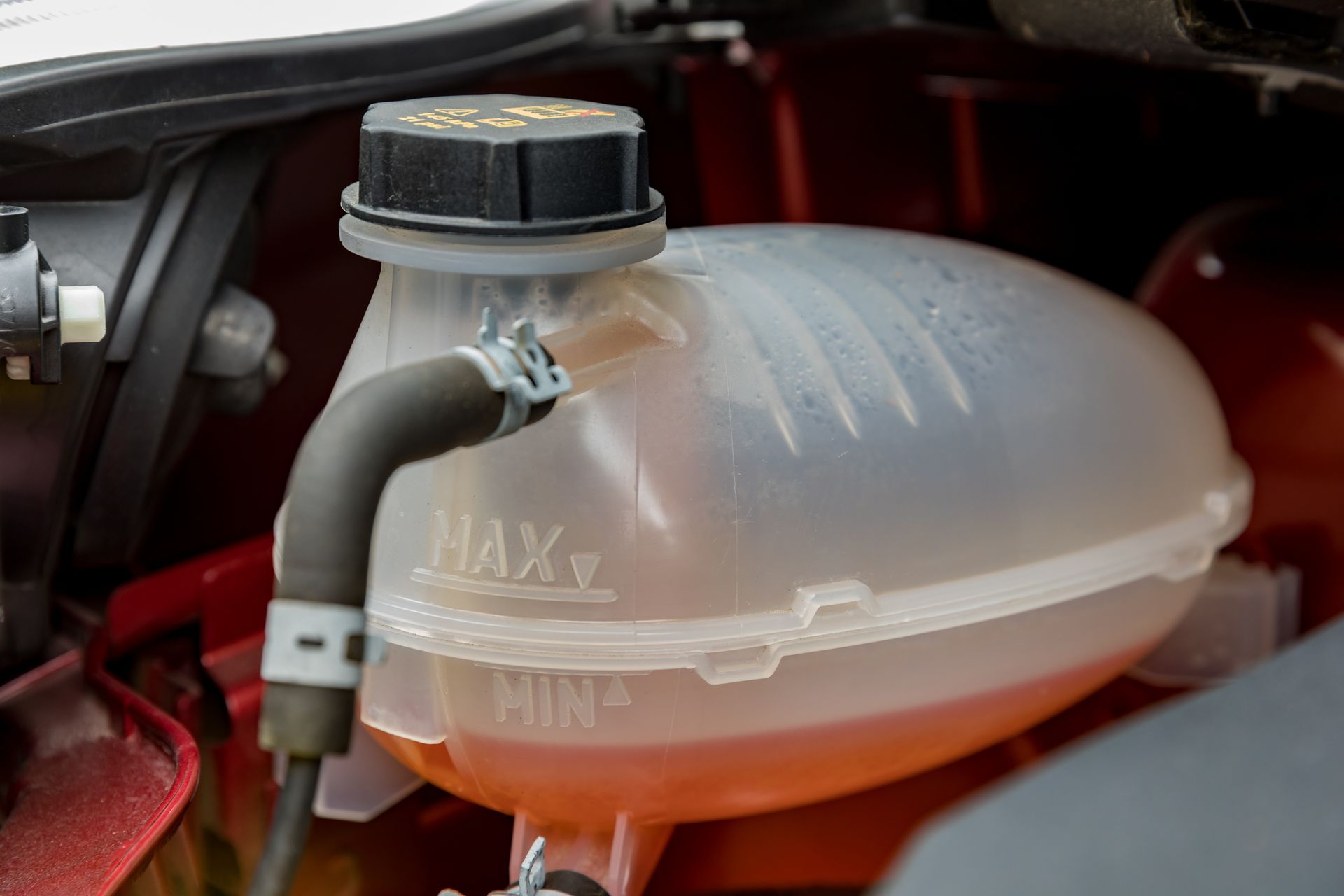
- With the engine completely cool, verify coolant is between the marks in the overflow bottle. Top up only with the correct coolant type for your vehicle.
- Note heater performance at idle versus highway speed and whether the gauge wanders on gentle grades.
Share these details with our service advisor. They make the test plan precise.
How We Confirm the Diagnosis and Fix It Right
Our technicians do more than read a gauge. We start with a pressure test to make sure low coolant or a hidden leak is not the real culprit. Next, we use a scan tool to read the engine coolant temperature from the sensor and compare it to an external infrared reading at the thermostat housing and radiator tanks. If the numbers disagree, we have a direction.
On some models, we command the cooling fans and watch the temperature reaction to verify the flow. When replacement is the fix, we install a quality thermostat with the correct temperature rating, renew the housing gasket or seal, and perform a proper vacuum fill and bleed so air pockets do not return. A road test confirms the needle rises cleanly to normal and stays there with strong cabin heat.
Restore Steady Temperatures with A Street Automotive in Auburn, WA
If your gauge is wandering, warm air takes too long, or the engine feels hot under light loads, we are ready to help. Our team will test the system, confirm whether the thermostat is the bottleneck, and replace parts with the right specification.
Schedule a visit with
A Street Automotive in Auburn, WA, and drive away with stable temperatures, strong heat, and a cooling system you can trust in every season.